Fluoropolymer & Fluoroelastomer Expansion Joints
Fluoropolymer Expansion Joints
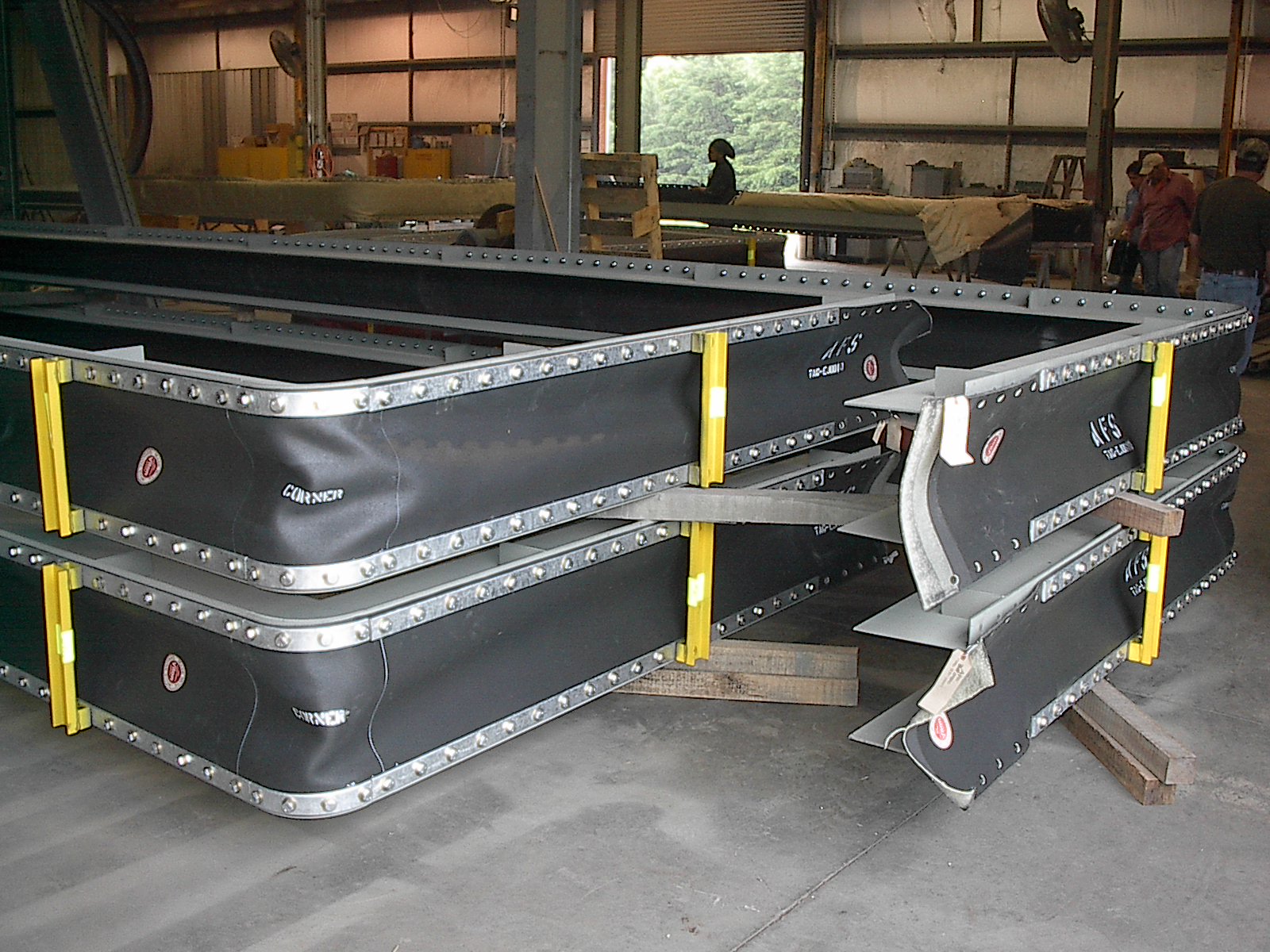
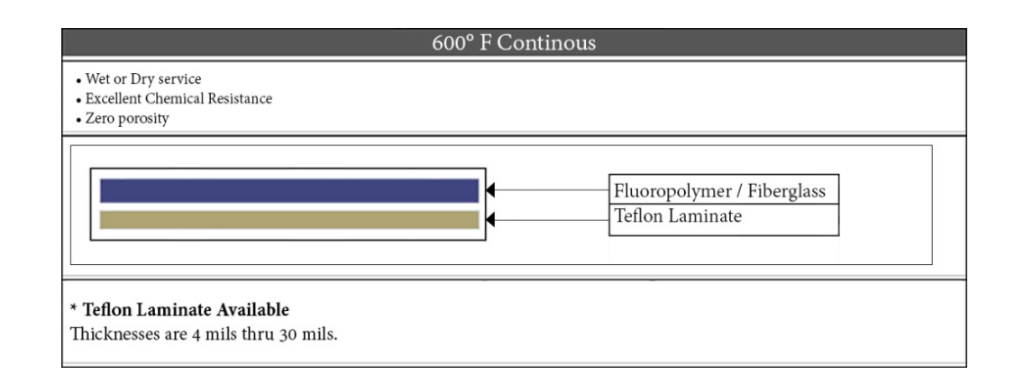
When your industrial process demands expansion joints capable of handling significantly higher temperatures than standard elastomeric solutions, Advanced Flexible Systems, Inc. provides an engineered line of Fluoropolymer expansion joints designed specifically for those demanding environments. Rated for temperatures up to 600 degrees Fahrenheit, these joints perform reliably across both wet and dry operating conditions.
Fluoropolymer materials deliver outstanding chemical inertness that can be further reinforced by adding a high-density Teflon laminate with thicknesses ranging between 4 and 30 mils. AFS supplies these joints in standard catalog active lengths as well as fully customized geometries engineered to client specifications.
Typical Movements – Fluid Sealing Association Handbook – Table D-B
| Type | FACE TO FACE | AXIAL COMPRESSION | AXIAL EXTENSION | LATERAL MOVEMENT |
|---|---|---|---|---|
| Composite Type Flexible Element | 06" (150mm) | 1" (25mm) | 1/2" (13mm) | +/-1/2" (13mm) |
| 09" (230mm) | 2" (50mm) | 1/2" (13mm) | +/- 1" (25mm) | |
| 12" (305mm) | 3" (75mm) | 1" (25mm) | +/- 1,1/2" (38mm) | |
| 16" (405mm) | 4" (100mm) | 1" (25mm) | +/- 2" (50mm) |
Advanced Flexible Systems, Inc. offers non-standard widths (active lengths) and movement capabilities as required by the client.
Have questions regarding our products or need a quote?
Contact UsFrequently Asked Questions About Expansion Joints
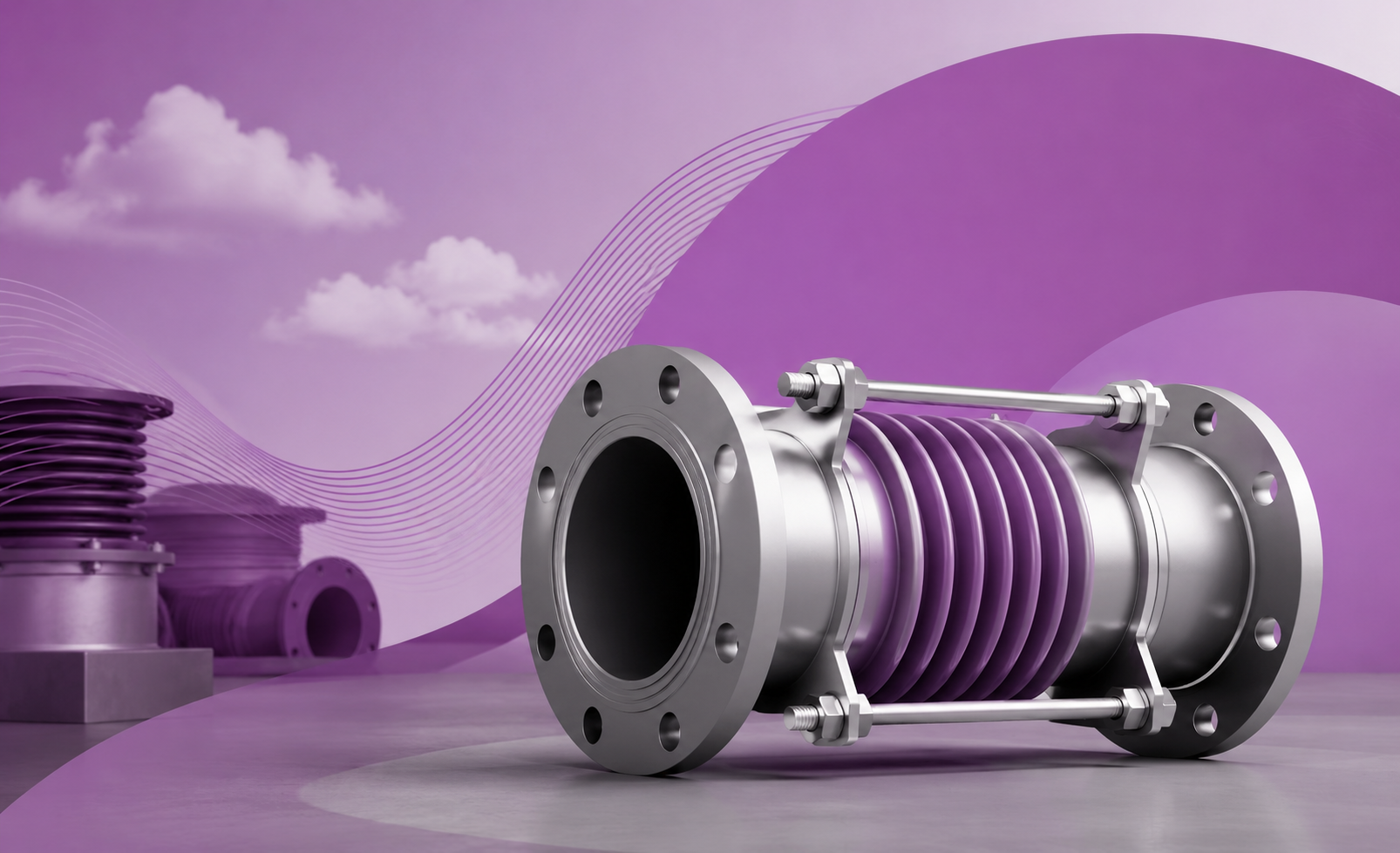
Fluoropolymer expansion joints (such as PTFE/Teflon) offer superior chemical resistance and handle temperatures up to 600°F, while fluoroelastomer joints provide enhanced flexibility and elasticity for operations requiring greater movement absorption.